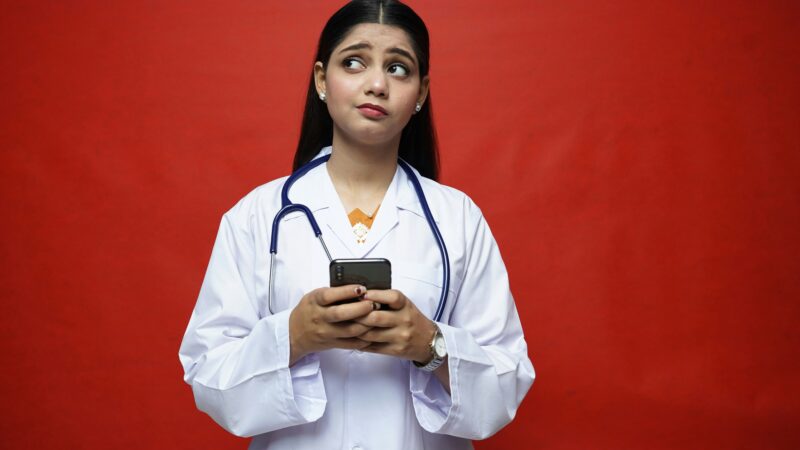
Improving Health Outcomes in LMICs with Mobile Technology
 raiyanhaider6@gmail.com

We are at a critical juncture in global health. For decades, we have grappled with the persistent disparities in health outcomes between high-income countries and low- and middle-income countries (LMICs). While advancements in medical science and public health have been significant, their reach remains uneven, leaving a substantial portion of the world’s population vulnerable to preventable diseases and often lacking access to even basic healthcare. However, a powerful new ally has emerged, one that has infiltrated nearly every corner of the globe and holds immense potential to bridge these gaps: mobile technology.
We are witnessing a paradigm shift, a recalibration of how we approach healthcare delivery in resource-constrained settings. Mobile phones, once considered a luxury, are now ubiquitous in LMICs, transcending socioeconomic barriers and offering a lifeline for communication, information, and increasingly, health services. This growing accessibility presents us with a unique opportunity to fundamentally improve health outcomes, not through grand, expensive, and often unsustainable infrastructure projects, but through agile, adaptable, and scalable solutions leveraging the devices many of us already carry.
Our journey to harness this potential is complex and requires a nuanced understanding of the challenges and opportunities inherent in deploying technology in LMICs. It is not a panacea, but rather a potent tool that, when thoughtfully implemented, can amplify our efforts, empower communities, and ultimately, save lives. We will explore how mobile technology is already making a difference and how we can further optimize its impact.
The ability to detect and respond to disease outbreaks rapidly is crucial in LMICs, where limited resources and infrastructure can exacerbate the impact of epidemics. Mobile technology offers a revolutionary approach to strengthening our disease surveillance mechanisms, moving beyond traditional paper-based reporting and enabling real-time data collection and analysis.
Real-time Data Collection and Reporting
We understand that timely and accurate data is the bedrock of effective public health interventions. Historically, collecting health data in LMICs has been a slow, cumbersome, and often error-prone process. Mobile phones, with their built-in capabilities for data input and transmission, are transforming this landscape. Healthcare workers, community health volunteers, and even citizens themselves can now report symptoms, diagnoses, and vital statistics directly from the field. This immediate influx of information allows us to identify anomalies, potential outbreaks, and geographic hotspots far more efficiently than ever before.
SMS-based Reporting Systems
One of the most accessible and effective methods we have employed is the use of Short Message Service (SMS). Even in areas with limited internet connectivity, basic mobile phones can send and receive text messages. This allows for the rapid reporting of syndromic surveillance data, such as an increase in fever or diarrhea cases in a specific village. These messages can be aggregated and analyzed to identify potential clusters and trigger further investigations. The simplicity of this system makes it highly adaptable and requires minimal training for users.
Mobile Applications for Data Entry
As mobile network coverage and smartphone penetration increase, we are seeing the widespread adoption of dedicated mobile applications. These apps can facilitate more sophisticated data collection, including the ability to capture images, record audio, and even integrate with GPS for precise location tracking. This richer dataset allows for more accurate mapping of disease prevalence, identification of risk factors, and better understanding of transmission patterns. Furthermore, these applications can be designed with offline capabilities, allowing data to be stored locally and uploaded when connectivity becomes available, overcoming intermittent network challenges.
Predictive Analytics and Early Warning Mechanisms
Beyond simply reporting, mobile technology enables us to move towards predictive analytics, anticipating potential outbreaks before they escalate. By analyzing trends in reported data, combined with other relevant information such as weather patterns, population movement, and even social media sentiment (with appropriate ethical considerations), we can develop early warning systems.
Anomaly Detection Algorithms
We are developing and deploying algorithms that can sift through the vast amounts of incoming data to identify deviations from baseline patterns. A sudden spike in a particular symptom in a specific region, for instance, can trigger an alert, prompting rapid investigation by health authorities. This proactive approach allows for a more targeted and efficient allocation of resources, potentially averting widespread epidemics.
Integration with Environmental and Social Data
The true power of mobile data lies in its integration with other sources. By correlating mobile health data with environmental factors like rainfall or temperature, which can influence vector-borne diseases, or with social data such as population density or travel patterns, we can build more robust predictive models. This interdisciplinary approach allows us to anticipate the conditions under which outbreaks are more likely to occur, enabling us to implement preventative measures.
Mobile health technology has shown promising potential in improving health outcomes in low- and middle-income countries (LMICs), particularly through innovative approaches outlined in various studies. For instance, an insightful article on the impact of mobile health interventions in LMICs can be found at Mobile Health Global, which discusses how these technologies can enhance access to healthcare services, improve patient engagement, and ultimately lead to better health outcomes. The article emphasizes the importance of tailored mobile health solutions that address the unique challenges faced by these regions, making a compelling case for further investment and research in this field.
Improving Access to Health Information and Education
A significant barrier to improved health outcomes in LMICs is the lack of readily accessible and understandable health information. Mobile technology, with its ability to disseminate information widely and affordably, offers a powerful solution to empower individuals and communities with the knowledge they need to make informed health decisions.
Health Literacy Enhancement
We recognize that health literacy is a critical determinant of health. When people understand basic health principles, preventive measures, and the importance of seeking timely medical care, their health outcomes improve dramatically. Mobile platforms provide a scalable means to deliver this essential education.
SMS-based Health Tips and Reminders
Similar to disease reporting, SMS channels are invaluable for disseminating health tips and reminders. We can send out regular messages on topics like hygiene, nutrition, vaccinations, prenatal care, and the importance of family planning. These messages can be tailored to specific demographics, such as pregnant women or mothers of young children, ensuring relevance and impact. The brevity of SMS makes it easily digestible and accessible even for those with limited literacy skills.
Multimedia Content Delivery via Mobile Apps and Web Platforms
For those with smartphones and internet access, we have the capacity to deliver richer, more engaging health education content. This includes short videos explaining complex medical conditions, interactive modules for learning about disease prevention, and audio recordings for those who prefer auditory learning. These platforms can host a wealth of information, serving as a digital health library for individuals and communities.
Promoting Maternal and Child Health
Maternal and child mortality rates remain unacceptably high in many LMICs. Mobile technology can play a pivotal role in improving antenatal care, safe delivery practices, and postnatal care, ultimately saving the lives of mothers and newborns.
Appointment Reminders and Follow-up
Pregnancy and childbirth require consistent medical attention. Mobile platforms can be used to send automated reminders for antenatal and postnatal appointments, reducing missed appointments and ensuring that mothers receive the necessary care throughout their pregnancy journey. They can also facilitate follow-up communications to check on the well-being of both mother and child.
Targeted Information for Pregnant Women and New Mothers
We can leverage mobile technology to provide specific guidance to pregnant women and new mothers. This includes information on recognizing danger signs during pregnancy, breastfeeding techniques, child nutrition, immunization schedules, and common childhood illnesses. This continuous stream of relevant information empowers these vulnerable groups to take better care of themselves and their infants.
Facilitating Remote Consultations and Telemedicine

The scarcity of healthcare professionals in remote and underserved areas of LMICs is a persistent challenge. Mobile technology, particularly with the increasing sophistication of video and audio communication, opens up avenues for remote consultations and telemedicine, bringing healthcare expertise directly to those who need it most.
Bridging Geographical Barriers
We understand that for many in LMICs, reaching a healthcare facility can be a significant undertaking, involving long journeys, loss of income, and considerable hardship. Telemedicine, powered by mobile devices, can effectively bridge these geographical divides.
Video Consultations with Healthcare Providers
With the advent of reliable mobile internet and affordable smartphones, video consultations have become a viable option. Patients can connect with doctors and specialists remotely, describing their symptoms and receiving diagnoses or treatment advice. This is particularly beneficial for chronic disease management, follow-up care, and consultations with specialists who may be located in urban centers.
Asynchronous Consultations via Images and Text
Even in areas with less robust internet connectivity, asynchronous consultations are possible. Patients can send images of their ailments (e.g., skin rashes, wounds) along with detailed descriptions via secure messaging platforms. Healthcare providers can then review these materials at their convenience and provide advice or prescribe medication. This modality is particularly useful for conditions that do not require immediate physical examination.
Enhancing the Role of Community Health Workers
Community Health Workers (CHWs) are often the first point of contact for healthcare in many LMICs. Mobile technology can significantly augment their capabilities, transforming them into more effective healthcare conduits.
Digital Tools for Diagnosis and Referral
We can equip CHWs with mobile applications that provide diagnostic support tools, flowcharts, and decision-making algorithms. These tools can help them identify common illnesses, understand when to refer a patient to a higher level of care, and provide basic treatment for minor ailments. This empowers CHWs to manage a wider range of conditions and reduces the burden on more distant healthcare facilities.
Remote Support for CHWs
CHWs often face situations beyond their training or experience. Mobile technology allows them to connect with supervising doctors or nurses for guidance and support. They can share patient case information, discuss diagnostic challenges, and receive immediate advice, thereby improving the quality of care delivered at the community level.
Improving Drug Management and Supply Chain Efficiency

The availability of essential medicines is another critical aspect of healthcare provision in LMICs. Stockouts, counterfeit drugs, and inefficient distribution systems can undermine even the best healthcare strategies. Mobile technology offers a promising solution for enhancing the transparency, efficiency, and accountability of drug management and supply chains.
Real-time Inventory Management
We recognize the challenge of tracking medications in complex and often remote supply chains. Mobile technology can revolutionize inventory management, ensuring that essential drugs are available where and when they are needed.
Mobile Applications for Stock Tracking
Healthcare facilities and pharmacies can utilize mobile applications to record incoming and outgoing stock of medicines. This data can be updated in real-time, providing an accurate overview of inventory levels at any given time. This helps prevent overstocking of certain items and understocking of others, optimizing resource allocation.
Automated Reordering and Stock Alerts
By setting predefined minimum stock levels, mobile systems can automatically trigger alerts or even initiate reorder requests when supplies begin to dwindle. This proactive approach prevents stockouts and ensures that essential medications remain consistently available for patients. This is particularly crucial for managing chronic medications and vaccines.
Combating Counterfeit Drugs and Ensuring Authenticity
The prevalence of counterfeit and substandard medications is a grave threat to public health in LMICs. Mobile technology can provide tools to verify the authenticity of drugs and reduce the circulation of falsified products.
Barcode Scanning and Authentication
Many pharmaceutical products now include unique barcodes. Mobile applications can be developed to scan these barcodes, cross-referencing the information with a central database to verify the product’s authenticity and origin. This allows healthcare professionals and even consumers to quickly identify potentially counterfeit medications.
Secure Tracking and Traceability
By using mobile devices to scan drugs at each point in the supply chain – from manufacturing and distribution to dispensing – we can create a traceable record of each product. This end-to-end traceability makes it much harder for counterfeit drugs to enter the legitimate supply chain and significantly enhances accountability.
Mobile health technology has emerged as a transformative force in improving health outcomes in low- and middle-income countries (LMICs). A recent article highlights the impact of mobile health interventions on maternal and child health, demonstrating significant improvements in access to care and health education. For a deeper understanding of these advancements, you can explore the findings in this insightful piece on mobile health technology and its effectiveness in LMICs found here. The integration of mobile solutions is paving the way for innovative approaches to healthcare delivery in resource-limited settings.
Strengthening Health Workforce Training and Support
| Study | Location | Participants | Intervention | Outcomes |
|---|---|---|---|---|
| Study 1 | LMIC 1 | 500 | Mobile health app | Improved medication adherence |
| Study 2 | LMIC 2 | 300 | Text message reminders | Reduced hospital readmissions |
| Study 3 | LMIC 3 | 700 | Telemedicine consultations | Improved maternal and child health outcomes |
The capacity and skills of the health workforce are paramount to delivering quality healthcare. In LMICs, shortages of trained professionals and limited access to continuous training opportunities pose significant challenges. Mobile technology can serve as a powerful tool for enhancing both initial training and ongoing professional development of healthcare workers.
Accessible and Scalable Training Programs
We understand that traditional in-person training is often resource-intensive and difficult to scale in LMICs. Mobile platforms offer a more flexible and cost-effective way to deliver training to a wider audience.
E-learning Modules for Skill Development
Mobile apps and web platforms can host a variety of e-learning modules covering essential clinical skills, disease management protocols, and public health principles. These modules can be designed to be interactive, incorporating quizzes, case studies, and simulations to reinforce learning. The ‘learn-at-your-own-pace’ nature of these programs is particularly beneficial for healthcare workers balancing demanding schedules.
Just-in-Time Information and Clinical Support Tools
When faced with a specific clinical scenario, healthcare workers often need quick access to relevant information. Mobile devices can provide instant access to medical databases, drug formularies, diagnostic guidelines, and treatment protocols. This “just-in-time” support can help improve decision-making at the point of care, ensuring that evidence-based practices are followed.
Peer-to-Peer Learning and Knowledge Sharing
The collaborative nature of mobile technology fosters knowledge sharing and peer-to-peer learning among healthcare professionals, especially those in isolated or underserved areas.
Virtual Communities of Practice
We are establishing virtual communities of practice where healthcare workers can connect with their peers, share experiences, discuss challenging cases, and seek advice from more experienced colleagues. These online forums and chat groups create a supportive network and facilitate the dissemination of best practices and innovative solutions.
Mentorship and Supervision via Mobile
Mobile technology enables remote mentorship and supervision, particularly for junior healthcare workers or those in remote locations. Experienced clinicians can provide guidance, review cases, and offer feedback through audio or video calls, or even asynchronous communication, effectively extending their reach and improving the quality of care provided by less experienced staff.
In conclusion, the integration of mobile technology into healthcare systems in LMICs is not merely an incremental improvement; it is a transformative force. We have explored its potential to revolutionize disease surveillance, empower individuals with health information, expand access to healthcare through telemedicine, optimize drug supply chains, and bolster the skills of our health workforce. The journey ahead requires continued investment, thoughtful design, and strong partnerships to ensure that the benefits of this technology reach every community. By embracing the power of the mobile phone, we can collectively move towards a future where improved health outcomes are not a privilege, but a reality for all.
FAQs
What is mobile health technology?
Mobile health technology, also known as mHealth, refers to the use of mobile devices such as smartphones, tablets, and other wireless devices to support medical and public health practices. This can include applications for patient monitoring, health education, data collection, and communication between healthcare providers and patients.
What are LMICs?
LMICs stands for Low- and Middle-Income Countries. These are countries with lower average incomes and less developed healthcare systems compared to high-income countries. Examples of LMICs include countries in Africa, Asia, and Latin America.
What is the R21 R33 grant for mobile health technology and outcomes in LMICs?
The R21 R33 grant is a funding opportunity provided by the National Institutes of Health (NIH) for research projects focused on developing and testing mobile health technology interventions in LMICs. The R21 phase supports the initial exploration of innovative ideas, while the R33 phase supports the implementation and evaluation of the developed interventions.
What are the potential outcomes of using mobile health technology in LMICs?
The use of mobile health technology in LMICs has the potential to improve access to healthcare services, enhance disease surveillance and monitoring, increase health education and awareness, and facilitate communication between healthcare providers and patients. These outcomes can contribute to better health outcomes and reduced healthcare disparities in LMICs.
What are some examples of mobile health technology interventions in LMICs?
Examples of mobile health technology interventions in LMICs include mobile applications for maternal and child health monitoring, text message-based reminders for medication adherence, telemedicine platforms for remote consultations, and mobile-based data collection for disease surveillance and research. These interventions aim to address specific healthcare challenges in LMICs and improve health outcomes.